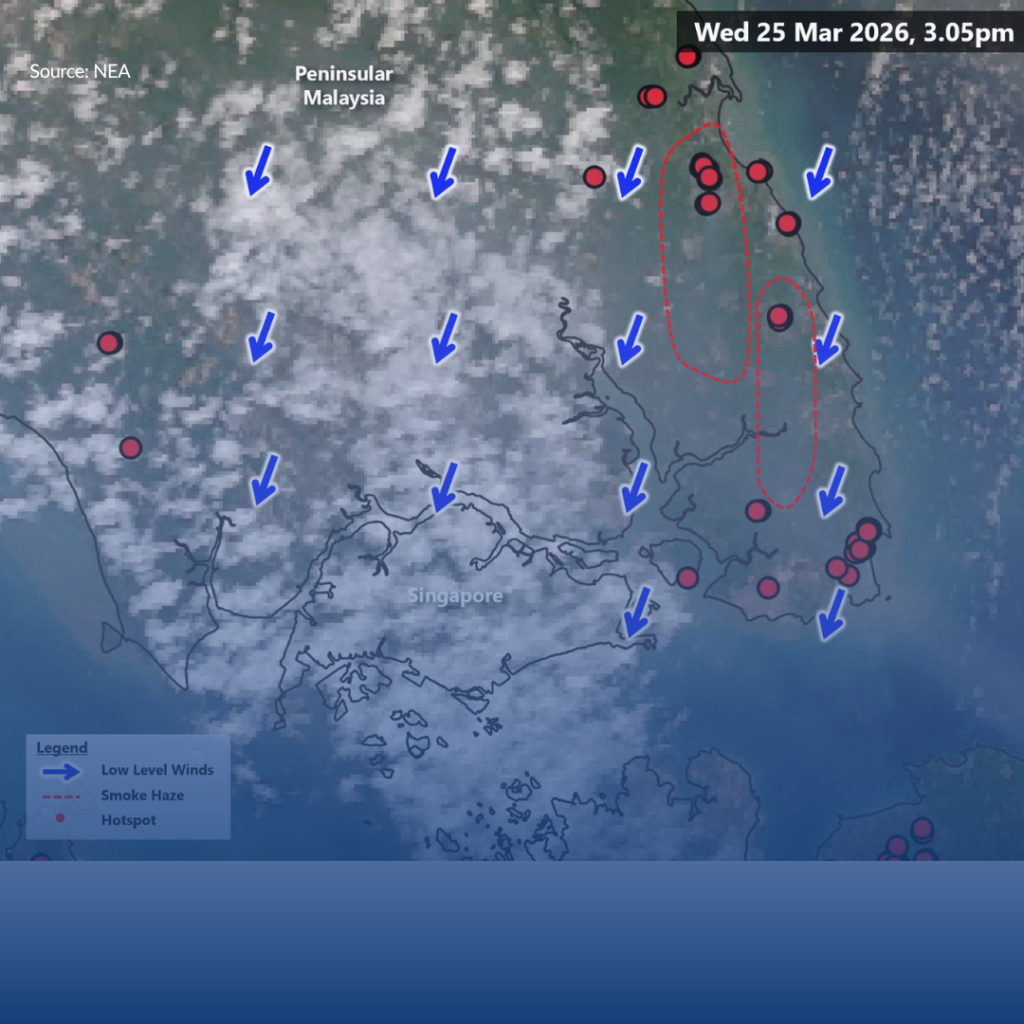
The transboundary haze in Southeast Asia is a perennial issue. In the SIIA Haze Outlook 2020 report, the researchers looked at three factors (weather, peat and people) to assess the risk of transboundary haze in Southeast Asia during the coming dry season.
Unusually hot and dry conditions exacerbated the problem in 2019. While conditions this year will be less severe, the COVID-19 pandemic could throw a spanner in the works, with mobility restrictions halting on-the-ground monitoring, and funding that would otherwise go to fire-prevention efforts being reallocated instead to health services. Read more about the SIIA’s latest report in this Mongabay article –https://news.mongabay.com/2020/07/covid-19-indonesia-forest-fire-haze-dry-season/